
Home Construction Loan in India: A Practical Guide for Building Your Own House
Building a house on your own plot gives you the freedom to plan the design, layout and construction according to your family’s needs. However, construction also requires careful financial planning. Costs can arise at different stages, from site preparation and foundation work to structural construction, finishing and essential installations.
For people exploring a Home Construction Loan in India, understanding how construction financing works can help them plan the project more effectively. Instead of treating the loan simply as a source of funds, borrowers should consider the construction budget, repayment capacity and expected funding requirements throughout the project.
When Can a Construction Loan Be Useful?
A construction loan is designed for borrowers who want to build a residential property, subject to the lender’s applicable terms and eligibility requirements.
Unlike purchasing a ready property, construction involves expenses spread across multiple stages.
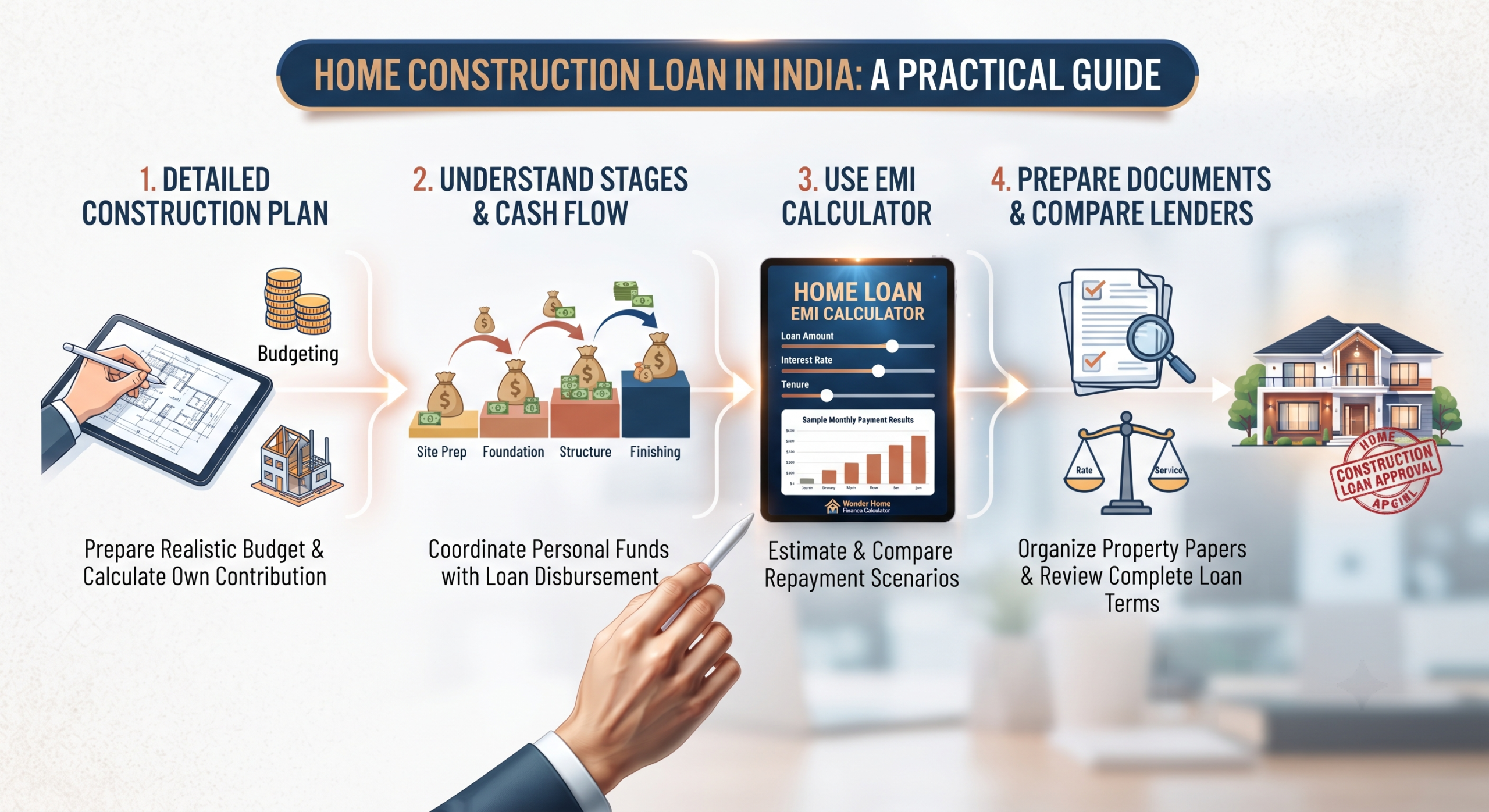
Start With a Detailed Construction Plan
Before applying for finance, prepare an approximate construction budget. Consider the expected cost of materials, labour, architectural or professional services and other construction-related expenses.
A realistic estimate can help you determine how much funding may be required and how much you can contribute from your own resources.
Calculate Your Own Contribution
Borrowers should not assume that the entire construction cost will necessarily be financed through a loan. The applicable financing structure depends on the lender, applicant profile, property and other relevant factors.
Keep Additional Funds Available
Construction projects can sometimes involve unexpected expenses. Material prices may change, design requirements can evolve and additional work may become necessary.
Keeping a reasonable financial buffer can help manage such situations without disrupting the project.
Understand Construction Stages
Building a house is usually completed in multiple stages rather than all at once. The funding requirement may therefore change as construction progresses.
Plan Your Cash Flow
Think about when major expenses are likely to occur. Foundation work, structural construction, electrical and plumbing work, flooring, painting and finishing can all require funds at different times.
Understanding the expected cash flow can make it easier to coordinate your personal contribution with the financing arrangement.
Know How Disbursement May Work
Construction-related financing can involve disbursement based on the progress of construction, subject to the lender’s policies and applicable terms.
Keep Construction Documents Updated
Applicants should maintain relevant property papers, approved plans and other documentation required for the financing process.
Keeping documents organised can make communication with the lender more efficient when information is requested at different stages.
Estimate Your EMI Before Starting Construction
Construction costs are only one side of the financial equation. The borrower also needs to consider the repayment that will follow.
Use an EMI Calculator
A home loan EMI calculator can help estimate potential monthly repayments based on the loan amount, interest rate and tenure.
Try different loan amounts and tenures before finalising your construction budget. This can help you understand whether the expected EMI fits comfortably within your monthly income.
Home Loan Calculator can be useful for preliminary EMI planning.
Consider the Cost of Construction Over Time
The cost estimated at the beginning of a project may not always remain unchanged until completion.
Plan for Price Changes
Construction materials and labour costs can vary. Borrowers should therefore avoid creating a budget that leaves no room for unexpected changes.
A realistic construction plan should distinguish between essential work and optional upgrades so that spending can be prioritised if costs increase.
Keep Your Financial Commitments in Balance
A construction loan becomes another long-term financial commitment. Existing EMIs, household expenses and future financial goals should be considered before deciding the loan amount.
Avoid Overstretching Your Budget
Borrowing the maximum possible amount may not always be the most suitable choice. A manageable EMI can provide greater flexibility during the construction period and after the house is completed.
Choose the Loan According to Your Construction Requirement
Before applying for a Home Construction Loan in India, borrowers should understand the lender’s eligibility requirements, documentation, financing structure and applicable terms.
Compare the Complete Loan Terms
Do not evaluate a loan only on the basis of the advertised interest rate. Consider the overall cost, repayment structure, processing requirements and servicing support.
The suitability of a loan depends on the individual borrower’s circumstances and the property being constructed.
Prepare Before Starting the Application
Good preparation can make the financing process more organised. Keep financial documents, property papers and construction-related information ready before submitting the application.
Wonder Home Finance offers housing finance solutions for eligible borrowers with different residential financing requirements.
Build With a Long-Term Financial Plan
Constructing your own home can be rewarding, but it requires discipline in both construction management and financial planning. A carefully prepared budget, realistic loan requirement and manageable EMI can help reduce financial stress during the project.
Anyone considering a Home Construction Loan in India should first understand the expected construction cost, determine their own contribution, estimate the potential repayment and review the applicable loan terms.
Planning these elements before construction begins can provide a stronger financial foundation for building a home that meets your family’s needs without placing unnecessary pressure on your finances.